Our Navigation Model
The Navigator Model is an approach to supporting people with multiple underlying needs—such as substance misuse, homelessness, mental health issues, and offending—by assigning them a dedicated “navigator” who coordinates all aspects of their care.
Why It Matters
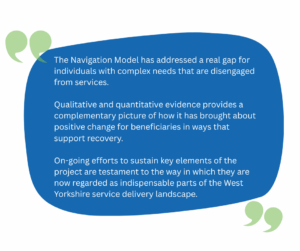
his model is proven to help people break cycles of disadvantage by offering practical help and emotional support in a way that feels personal, not transactional. It was first found to be effective during the WY-FI (Fulfilling Lives) Programme in Bradford (2013–2019), demonstrating that people with entrenched issues can achieve stability and recovery when services are integrated around their needs (Sheffield Hallam University, 2020). The model incorporates essential elements that promote stability, recovery, and progress for individuals facing overlapping challenges of offending, homelessness, substance use, and mental health issues.
 (Wilson et al., 2020, p55)
In practice its core features include:
- Trauma-Informed and Person-Centred: Focus on the individual’s goals, strengths, and lived experience rather than rigid service pathways.
- One-to-One Support: Each person works with a named navigator who builds trust and provides consistent, personalized support.
- Clear Accountability: One named professional responsible for coordinating care and tracking progress.
- Multi-Agency Coordination: The navigator brings together services like housing, health, criminal justice, and social care through case conferences and shared plans.
- Advocacy, System Navigation and Problem-Solving: Navigators help clients overcome barriers (e.g., missed appointments, benefit issues) and ensure services don’t operate in silos.
- Small Caseloads: Typically 10 people per navigator, allowing intensive engagement and continuity even through setbacks or relapse.
- Personalisation Fund: A discretionary budget enabling navigators to cover essential costs (e.g. rent bonds, furnishings, travel) that help individuals move towards independence and recovery.
Carrying Forward the Wi-Fi Legacy
Bridge now has extensive experience delivering the navigation model.
- We operate from an evidence-base in support of the navigation model offering relational support for individuals with overlapping challenges such as homelessness, substance misuse, mental health issues, and offending.
- We convene and participate in multi-agency collaboration: Working closely with partners like the police and housing providers to coordinate care and reduce duplication.
- Continue to adapt the model through targeted services like MARRS, Lotus, the Multiple Needs Navigator Service and Housing First, all designed to break cycles of harm and create stability, recovery, and resilience. Importantly we’ve been able to demonstrate reductions in reoffending (e.g., >85% reduction through MARRS) and cost savings across criminal justice and housing systems.
This model has transformed lives in Bradford and continues to shape our work today.